
New exhibition asks what our obsession with pets reveals about human nature
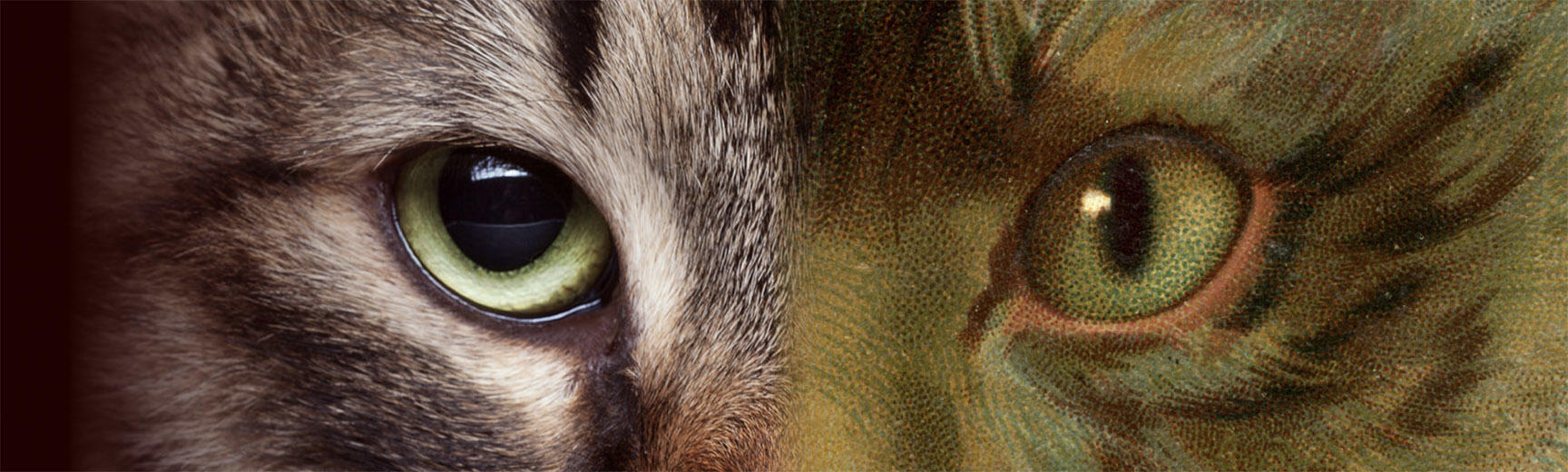
Pets & their People
11 March 2026 – 27 September 2026
ST Lee Gallery, Weston Library
The Bodleian Libraries announces its latest exhibition, Pets & their People, exploring why humans keep animals close, and what our evolving relationships with pets may reveal about ourselves. From the earliest depiction of a service animal to Daniel Meadows’ photos of a Lancashire pet cemetery, the exhibition charts the history of the taming of animals, investigating why we invest so much emotional and physical energy into these relationships.
In the UK today, 17 million households have at least one pet. We spend millions of pounds every year on pet food, veterinary bills, and insurance – even forking out for pet psychologists or throwing them elaborate birthday parties. Beyond the deep and loving connections humans have with animals, Pets & their People asks more probing – and uncomfortable – questions about the nature of the owner-pet relationship. Why do we choose to have ‘wild things’ in our homes? Why do we spend so much time and money on our pets? Why do we go to such lengths to adapt our homes and lifestyles to suit them?
The exhibition proposes that our fascination with pets is rooted in evolutionary instincts from our days as hunter-gatherers, a way of maintaining our connection to the wilderness. Meanwhile, the pandemic and shift to remote working have contributed to the rise of pet culture, prompting more discussion of the ethical concerns surrounding animal ownership. The exhibition asks whether there is a darker side to our need to domesticate and tame: as loneliness statistics increase, might we be trying to substitute our lack of meaningful human relationships with animal companions?
Some items will be on display for the first time, including a rare first edition of Alice’s Adventures in Wonderland, one of only 22 withdrawn first editions to survive. The book, recently acquired by the Bodleian Libraries alongside Christ Church, Oxford, was Lewis Carroll’s personal copy and contains original illustrations by John Tenniel. Carroll’s classic story is part of the fictional tradition of imbuing animals with human characteristics, reflecting the well-documented human tendency to blur the line between ‘us and them’. Similarly, the 16th Century Turkish manuscript Acaib ül-mahlūkat (Wonders of Creation) features a depiction of a dog-headed human, further revealing our persistent muddling of the distinction between the human and animal worlds. This extends to the contemporary world, as demonstrated in a previously unseen series by celebrated photographer Daniel Meadows depicting a Lancashire pet cemetery, showing the ways in which pet identity and moral significance are often conflated with our own.
Other items on display range from the whimsical to the profound, with highlights including: a portrait of Walter Scott’s dog, Maida; a 14th century Latin psalter showing one of the earliest depictions of an assistance animal; a papyrus scroll from Ancient Egypt serving as an early version of a tax disc and congestion charge document for a camel; an early tram ticket for a dog, issued in Blackpool, showing how pets can be treated as civic members of society; the original manuscript of Kenneth Grahame’s The Wind in the Willows; and a Dickin medal, created during World War II to honour the “conspicuous gallantry and devotion to duty” of animals during conflict. The exhibition also considers the history of non-biological pets, from soft toys and ‘pet rocks’ to virtual pets, revealing how the human instinct to nurture goes beyond living, breathing animals.
The human-pet relationship is largely rooted in companionship and love, and the exhibition features new poetry praising beloved pets, including an anthology written by local community groups. This connection has deep historical foundations, as shown in a private letter on display dated between the 3rd-4th century, requesting a puppy for a woman experiencing loneliness. Further examples of the tender bond between humans and their pets include photographs and sketches by novelists Raymond Chandler and Patricia Highsmith, who cherished their cats. A letter from Chandler to an acquaintance, written in the playful voice of his cat Taki, reads: “It has been suggested to me that I am a bit of a snob. How true! I prefer to be.”
The exhibition is curated by Professor Charles Foster – author, barrister, veterinarian, philosopher, and Fellow of Exeter College, Oxford. He is known for his award-winning book Being a Beast, which documented his time spent living in the wild as different animals, including a badger, a red deer, an otter, and a swift. Foster’s other publications include The Screaming Sky, which was shortlisted for the Wainwright Prize, which celebrates the best works of nature writing.
Professor Foster, curator of the exhibition, says:
It is my opinion that ‘pets’ are strange. When you take the emotional rewards away and just look at the relationship with logic, they are expensive, time- consuming and heartbreaking. Their presence in our lives demands an explanation. It has been a huge privilege to search for that explanation in the Bodleian archives and beyond. What I found was far more weird and exciting than I had ever imagined. The exhibition is about pets – yes – but also about how to thrive as a human.
Richard Ovenden, Bodley’s Librarian and Helen Hamlyn Director of the University Libraries, says:
For centuries, human relationships with animals have defied logic and explanation. Across time and culture, both keeping pets and having a personal connection to wildlife have given people great pleasure and contentment, and studies show the relationship is not strictly one-way. Our exhibition charts the evolution of pet keeping through our collections, from the more uncomfortable beginnings as hunter-gatherers, to the seismic benefits and deep affection between pet and owner of today.
Pets & their People is made possible with generous support from the John S Cohen Foundation.
The exhibition is accompanied by the book Pets & their People by Charles Foster, which was published by Bodleian Library Publishing on 6 November 2025.
For further information, please contact Flint Culture via bodleian.libraries@flint-culture.com.

