History of the Zoology Library and Collections

The ZOOLOGY LIBRARY provided material for the teaching and research undertaken in the Department of Zoology, where was situated. It contained the holdings of the former Elton Library, a specialist collection in the field of ecology, named after Charles Elton, of the Bureau of Animal Populations, the "father of animal ecology".

The Zoology Library included a small archive of research notes and other materials by members of the Department during the late 19th  to early 20th century, the most notable of which are the photograph albums from the Challenger Expedition, 1872-1876. A listing of publications arising from studies in Wytham Wood is still maintained. The Elton archive includes research material from Wytham studies.

The Alexander Library is a specialist reference collection seeking comprehensive coverage of the field of ornithology, and one of the foremost ornithological reference libraries in the world. It is an international resource and much of its material is obtained on special funds and contributions from the British Ornithological Union (BOU) [opens in new window] in recognition of services provided, or by exchange. It also houses the British Falconers' Club library, and retains all material permanently. It was founded on the personal collections of W.B. Alexander, the first director of the Oxford Bird Census (the predecessor of the Edward Grey Institute), and in his retirement, the first Librarian. Its collections  of  19th and 20th century books, pamphlets and periodicals, and archive [opens in new window] of ornithological notebooks and diaries of ornithologists of this era are extensive. The collections include material of interest to zoologists generally, particularly in the fields of  natural history, conservation, ecology and behaviour.

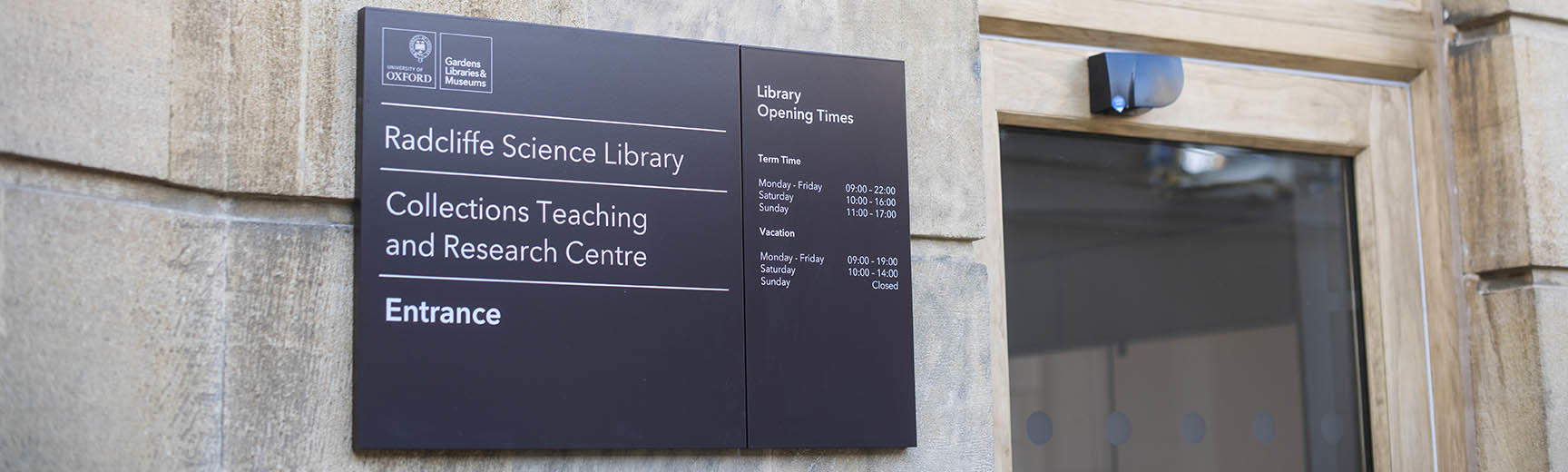
In summer 2010 the Zoology collections transferred to the Radcliffe Science Library, where they will continue to be available on open access. The Alexander Library will remain in the Zoology Department alongside the Edward Grey Institute.