- Visitor Information
-
Exhibitions and Events
- Forthcoming Events
-
Online Exhibitions
- The Romance of the Middle Ages
- Treasures of the Bodleian
- Manifold Greatness: Oxford and the Making of the King James Bible
- Tinker Tailor Writer Spy
- Shelley's Ghost: Reshaping the Image of a Literary Family
- The Vernon Manuscript
- John Aubrey and the Development of Experimental Science
-
Crossing Borders: Hebrew Manuscripts as a Meeting-place of Cultures
- From Roll to Codex
- Hebrew Scripts
- Arabic Art Forms
- Fables from East to West
- Hebrew Prayer Books for Public Use
- User-produced Hebrew Prayer Books
- Sciences
- Religious Traditions: the Temple
- Religious traditions: the Menorah
- Herbert of Bosham and his Hebrew sources
- Learning Hebrew in 13th c England
- From manuscript to book
- The Original Wind in the Willows
- Beyond the Work of One
- Past Events
- BODcast Library
- Ask Archivists Day
- Register for Updates
- About the Lyell Lectures
- Parliament Week (31 October - 6 November 2011)
- Bodleian Shop
- Hiring a Venue
- Filming
- Supporting the Library
- Meet Bodley's Librarian
- History of the Bodleian
- Bodleian Libraries Operations
- Policies, Reports and Strategy
Home » About Us » Exhibitions and Events » Online Exhibitions » Crossing Borders: Hebrew Manuscripts as a Meeting-place of Cultures
Crossing Borders: Hebrew Manuscripts as a Meeting-place of Cultures
The Bodleian Library’s winter exhibition tells the story of how together Jews, Christians and Muslims have contributed to the development of the book. Crossing Borders: Hebrew Manuscripts as a Meeting-place of Cultures draws on the Bodleian’s Hebrew holdings, one of the largest and most important collections of Hebrew manuscripts in the world.
Covering a time span of 300 years between the thirteenth century and fifteenth century, the exhibition brings to light different aspects of Jewish life in a non-Jewish medieval society.
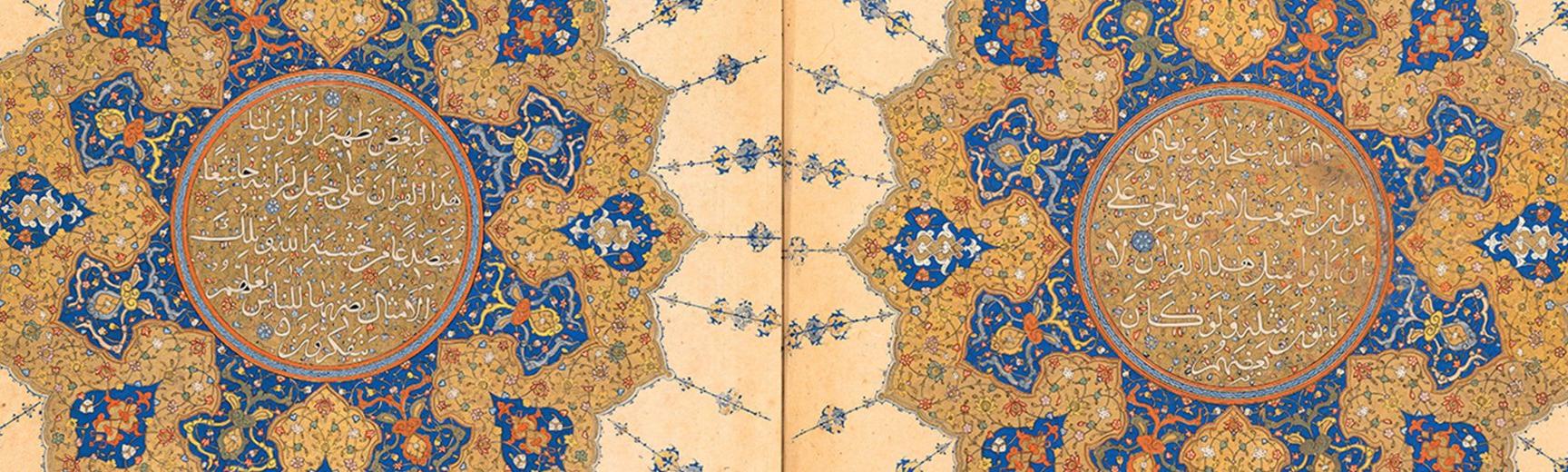
The social and cultural interaction between Jews and non-Jews in both the Muslim and Christian world is mirrored in the blending of the inherent elements of the manuscript such as decorative patterns, writing styles, script types and text genres. As a result Hebrew manuscripts produced in different geo-cultural regions look quite different, showing greater similarities to the non-Hebrew books produced in the same region than to each other.
By importing elements of the host culture, the Hebrew manuscripts are proof of coexistence and cultural affinity, as well as practical cooperation between Jews and their non-Jewish neighbours in the Middle Ages. The assortment of manuscripts is not restricted to religious text, but expend to literary and scientific works as well.
The exhibition has twelve themes:
From roll to codex
Hebrew scripts
Arabic art forms in Spanish book-production
Fables from East to West
Hebrew prayer books for public use
User-produced Hebrew prayer books and shared iconography
Sciences
Religious traditions shared by Jews and Christians: the Temple
Religious traditions shared by Jews and Christians: the Menorah
Herbert of Bosham and his Hebrew sources
Learning Hebrew in thirteenth-century England
From manuscript to book
A book which accompanies the exhibition is also available for purchase. Crossing Borders: Hebrew Manuscripts as a Meeting-place of Cultures, edited by Piet van Boxel and Sabine Arndt, paperback, 128 pp, 70 colour images, £24.99, ISBN: 978 1 85124 313 6
Related links
- BODcast Library
Listen to the exhibition opening speeches - Exhibition and events
See what's on at the libraries - Bodleian Bookshop
Buy the accompanying book
CROSSING BORDERS
8 Dec 2009 – 3 May 2010
- Exhibition Room, Bodleian Library
- Opening Hours:
9.00am - 5.00pm (Mon - Fri)
9.00am - 4.30pm (Sat)
11.00am - 5.00pm (Sun)
- Admission free